Stormcore SMC Divergence Master Auto HTF Review
Stormcore SMC & Divergence Master Auto HTF review: a trend tool that blends smart money concepts with divergence and higher-timeframe context.
🔬 Go Deeper Than One Indicator
You're reading about Stormcore SMC Divergence Master Auto HTF Review. Imagine 123 indicators voting on 20 markets, every 15 minutes, right to your phone. No more conflicting signals.
7-day free trial · Cancel anytime · No credit card to start
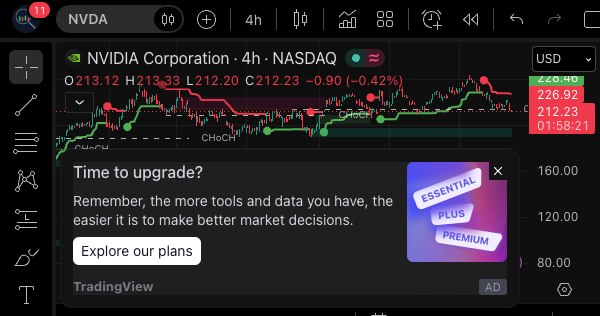
Stormcore’s SMC & Divergence Master is a trend indicator that tries to do two jobs at once. The name tells you most of what you need to know: it works with smart money concepts (SMC) and divergence signals, and the “Auto HTF” tag suggests it pulls in higher-timeframe context automatically rather than making you load a second copy of the indicator on a separate chart.
That’s the pitch. Whether it earns a spot on your chart depends on how you trade and how much you want one tool to do.
What it actually is
This is a trend-category indicator built around two overlapping ideas. The SMC half deals with the structure traders label as market structure, order blocks, and liquidity — the language of smart money trading that has spread widely across TradingView. The divergence half looks for disagreement between price and momentum, the classic signal that a move may be losing steam. The “Auto HTF” part means the indicator handles the higher-timeframe read internally, so you’re meant to get multi-timeframe context without stacking multiple indicators.
I want to be clear about a limitation up front: no official description or documentation was available for this specific listing when I put this together. So I’m describing the concept and the category, not quoting documented settings, defaults, or numbers. I can’t tell you what the defaults are, how many bars it looks back, or what thresholds trigger a signal — because that information isn’t in the source material. Treat anything numeric about this tool with suspicion until you read the author’s own notes on the chart.
The core idea, and why it’s appealing
SMC and divergence are both attempts to answer the same question from different angles: is this trend likely to continue, or is it about to turn? SMC gives you structure — where price has reacted before, where liquidity sits. Divergence gives you momentum — whether the push behind a move is fading. Putting them in one indicator is a reasonable design instinct, because a structure break with fading momentum means something different than a structure break with momentum behind it.
The Auto HTF layer is the part that saves you real screen real estate. Normally, checking higher-timeframe structure means either flipping timeframes constantly or running the same indicator twice with different settings. If the auto component does what the name implies, you get that context baked in.
How you’d use it
The sensible workflow is to let the indicator frame the trend and the higher-timeframe bias, then use the divergence element as a timing or caution layer. In other words: trade with the structure the tool identifies, but pay attention when divergence appears against that structure — that’s your cue to tighten risk or wait for confirmation rather than chase.
Because I have no documented inputs to reference, I can’t walk you through specific toggles or settings. Open the settings panel, see what the author exposed, and start with the defaults before changing anything. That’s the honest advice for any indicator where the documentation isn’t in front of you.
Pros and cons
Pros
- Combines two complementary concepts — structure and momentum — in a single overlay, which reduces chart clutter.
- The Auto HTF approach addresses a real pain point: multi-timeframe context without duplicate indicators.
- Sits in the trend category, so it’s built to help you align with direction rather than fight it.
Cons
- The “master” framing invites over-reliance. SMC labels and divergence are both interpretive — they need confirmation, not blind obedience.
- Combining two signal types can produce conflicting reads. Structure may say up while divergence says caution; the indicator won’t resolve that for you.
- Without published documentation, onboarding is trial and error. You’re learning the tool by watching it, not reading about it.
- Divergence is prone to false positives in choppy conditions, and nothing in the concept changes that.
Who it’s for
This suits traders already fluent in smart money concepts who want higher-timeframe context without juggling charts. If you understand order blocks and market structure, the SMC layer will feel natural. Discretionary swing and intraday traders who use divergence as a confirmation filter are the other obvious fit.
It’s less suited to pure mechanical traders who want a single unambiguous rule, and to beginners who haven’t internalized SMC vocabulary — the indicator will label things you don’t yet know how to interpret.
FAQ
Does it repaint? I can’t confirm this from available material. Test it yourself: watch signals on a live chart and compare to history after the fact. That’s the only reliable check.
What timeframes does it work on? Not documented in the source material. The Auto HTF feature implies it references a higher timeframe than your chart, but I won’t guess which.
Can I use it alone? You can, but combining structure and divergence means you should understand both before trusting either in isolation.
Verdict
A well-conceived mashup of two popular approaches, and the Auto HTF convenience is a genuine quality-of-life improvement. It loses a star only because the concept carries inherent interpretive risk and the documentation gap makes it harder to learn than it should be. If you already trade SMC and want divergence and higher-timeframe context in one place, it’s worth a look on a demo chart first.
Rating: ⭐⭐⭐⭐ (4/5)
Go Deeper with The Indicator Lab
🔬 The Lab Report — 123 indicators. 20 markets. One consensus verdict every 15 minutes. Stop guessing which indicator to trust.
📈 The Lab Edge — Time-Series Momentum across 166 markets. The same framework institutions use. Weekly signals to your phone.
📊 Prefer to trade on your own? Power your analysis on TradingView — the platform behind every review on this site.
Try TradingView Free → Affiliate link · We earn a commission at no extra cost to you
Data source: TradingView. This review is based on publicly available indicator information and the official TradingView script documentation. Always test indicators in a demo environment before live trading.
Chart full of indicators. Still not sure which one to trust.
You just read about Stormcore SMC Divergence Master Auto HTF Review. Add 10 more to your chart and you're drowning in conflicting signals. The Lab Report runs 123 indicators on 20 markets, tallies the consensus, and pings your phone every 15 minutes. Less clutter. One verdict.
What is the Lab Report? See how the consensus engine works →
Got your entries? Now what?
The Lab Edge runs Time-Series Momentum — the same framework institutions use — across 166 markets, 95% profitable in backtesting. One signal. Once a week. No indicators to configure.
Upgrade to Pro
LAB ORIGINALThis free trend, technical analysis indicators work — but if you want phone alerts, multi-timeframe scanning, and zero repaint, here's what we built:
🔬 Are you the developer of this indicator? Email us →