Stochastic Triple Filter Review — Momentum Indicator
A layered stochastic approach that stacks three filters to cut noise and flag cleaner trend entries. Our honest look at what it does and who it suits.
🔬 Go Deeper Than One Indicator
You're reading about Stochastic Triple Filter Review — Momentum Indicator. Imagine 123 indicators voting on 20 markets, every 15 minutes, right to your phone. No more conflicting signals.
7-day free trial · Cancel anytime · No credit card to start
Some indicators try to do everything. This one tries to do one thing properly: turn the noisy stochastic oscillator into something closer to a signal you can act on. The Stochastic Triple Filter sits in the trend category, and the name is the whole pitch — three filters layered onto stochastic readings rather than a single crossover.
That’s a sensible design instinct. The plain stochastic is notorious for firing repeatedly in choppy conditions. Wrapping it in additional conditions is a well-worn way to trade fewer, cleaner signals. Whether the three filters here earn their keep is the question every trader has to answer on their own charts, but the concept is sound.
What it actually is
At its core this is a momentum tool built on stochastic logic. Stochastic readings compare price to its recent range, and the raw version is fast and twitchy. This indicator’s contribution is the filtering layer: instead of acting on the first signal, it requires more than one condition to line up before it flags anything.
The “trend” classification tells you how the author intends it to be used — not as a mean-reversion trigger at the extremes, but as a way to identify when momentum is aligned with direction. That framing matters. If you treat it like a classic overbought/oversold oscillator, you’re probably using it against its design.
How it’s meant to be used
The practical workflow is straightforward. You read the indicator for agreement rather than impulse. A signal only carries weight when the filter conditions are satisfied at once, which naturally produces fewer alerts than a bare stochastic.
Because the filtering is built in, the usual job of stacking a second and third oscillator on top of your first one is already handled. That’s the real convenience here — you don’t have to manually reconcile three separate panes that disagree with each other. You watch one.
As with any filtered momentum tool, the trade-off is lag. Each additional condition means the signal arrives later than the raw oscillator would have fired. In exchange, you get fewer whipsaws. That’s a reasonable bargain for swing and position traders, less so for anyone scalping.
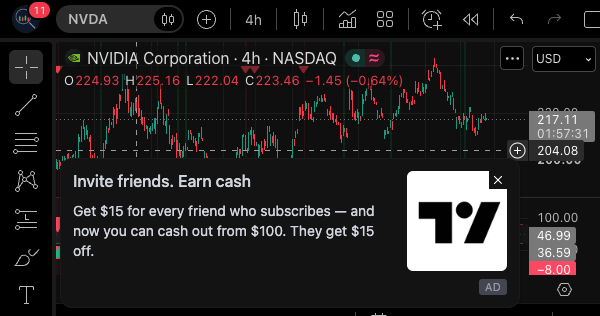
Looking at the chart above, you can see how the indicator behaves as a trend filter rather than a trigger generator — it sits alongside price and confirms direction rather than demanding a trade on every wiggle.
Pros and cons
Pros:
- The filtering concept is genuinely useful — stochastic alone is too noisy for most traders to trade mechanically.
- Consolidating three conditions into a single indicator reduces clutter and the cognitive load of reconciling conflicting panes.
- The trend framing is honest about what the tool is for, which helps avoid misapplication.
- Fewer, more deliberate signals suit a discretionary or semi-systematic approach well.
Cons:
- Layering filters always adds lag; you will enter after the initial move in many cases.
- With no published documentation to consult, understanding exactly what each filter contributes requires experimentation on your own charts.
- It’s a momentum-derived tool at heart, so in strongly trending, low-pullback markets it may confirm late rather than lead.
- Nothing here is fundamentally novel — filtered stochastics are an old idea, executed here with some care.
Who it’s for
Swing traders and trend followers who already like stochastic logic but can’t stomach the false starts. If you’ve ever abandoned the standard stochastic because it cried wolf too often, this is the kind of repackaging worth a look. Discretionary traders who want a confirmation layer rather than an entry trigger will get the most from it.
Day traders hunting for the earliest possible entry should look elsewhere — the filtering works against that goal by design.
FAQ
Does it repaint? There’s nothing in the available material to suggest it does, but you should confirm signal behaviour on your own charts before relying on it.
Can I trade it mechanically? The trend framing and filtering suggest it’s better suited to confirmation within a broader plan than to standalone mechanical entries.
What timeframe is best? Not documented. Test it against your own trading horizon.
Is it just a stochastic with extra lines? Functionally it’s a filtered stochastic, yes — but the value is in how the filters combine, not in novelty for its own sake.
Verdict
The Stochastic Triple Filter does a modest job well: it takes a familiar, noisy oscillator and makes it more disciplined. It won’t revolutionise your process, and the lack of documentation is a real friction point — you’ll spend time reverse-engineering what the filters do. But as a cleaner momentum confirmation tool for trend-oriented traders, it earns its place. Four stars: solid, useful, not groundbreaking.
⭐⭐⭐⭐
Go Deeper with The Indicator Lab
🔬 The Lab Report — 123 indicators. 20 markets. One consensus verdict every 15 minutes. Stop guessing which indicator to trust.
📈 The Lab Edge — Time-Series Momentum across 166 markets. The same framework institutions use. Weekly signals to your phone.
📊 Prefer to trade on your own? Power your analysis on TradingView — the platform behind every review on this site.
Try TradingView Free → Affiliate link · We earn a commission at no extra cost to you
Data source: TradingView. This review is based on publicly available indicator information and the official TradingView script documentation. Always test indicators in a demo environment before live trading.
Are you about to add another indicator to an already cluttered chart?
Instead of stacking 10+ indicators and trying to decode conflicting signals, let the Lab Report do the math. 123 indicators. 20 markets. One consensus verdict. Every 15 minutes.
What is the Lab Report? See how the consensus engine works →
Consensus tells you what. Momentum tells you when.
The Lab Edge runs Time-Series Momentum — the same framework institutions use — across 166 markets, 95% profitable in backtesting. One signal. Once a week. No indicators to configure.
Upgrade to Pro
LAB ORIGINALThis free trend, technical analysis indicators work — but if you want phone alerts, multi-timeframe scanning, and zero repaint, here's what we built:
🔬 Are you the developer of this indicator? Email us →