Directional Flow Signals Review: Settings, Strategy & How to Use It
Directional Flow Signals review: A momentum-based trend filter with clear entry/exit signals. Settings, strategy, pros/cons, and better alternatives tested.
🔬 Go Deeper Than One Indicator
You're reading about Directional Flow Signals Review: Settings, Strategy & How to Use It. Imagine 93 indicators voting on 20 markets, every 15 minutes, right to your phone. No more conflicting signals.
7-day free trial · Cancel anytime · No credit card to start
Directional Flow Signals looks like yet another “buy/sell” arrow indicator at first glance. But after hammering it across BTC, ES, and EURUSD on multiple timeframes, I found it’s actually a solid momentum filter with a few genuinely useful tricks. It won’t replace your entire system, but it can sharpen your entries.
What This Indicator Actually Does
Directional Flow Signals combines a smoothed momentum oscillator with a volatility-adjusted trigger line. When the oscillator crosses above the trigger, you get a green “Buy” arrow. Cross below, red “Sell” arrow. The twist? It also plots a colored histogram that changes shade based on the strength of the flow—not just direction.
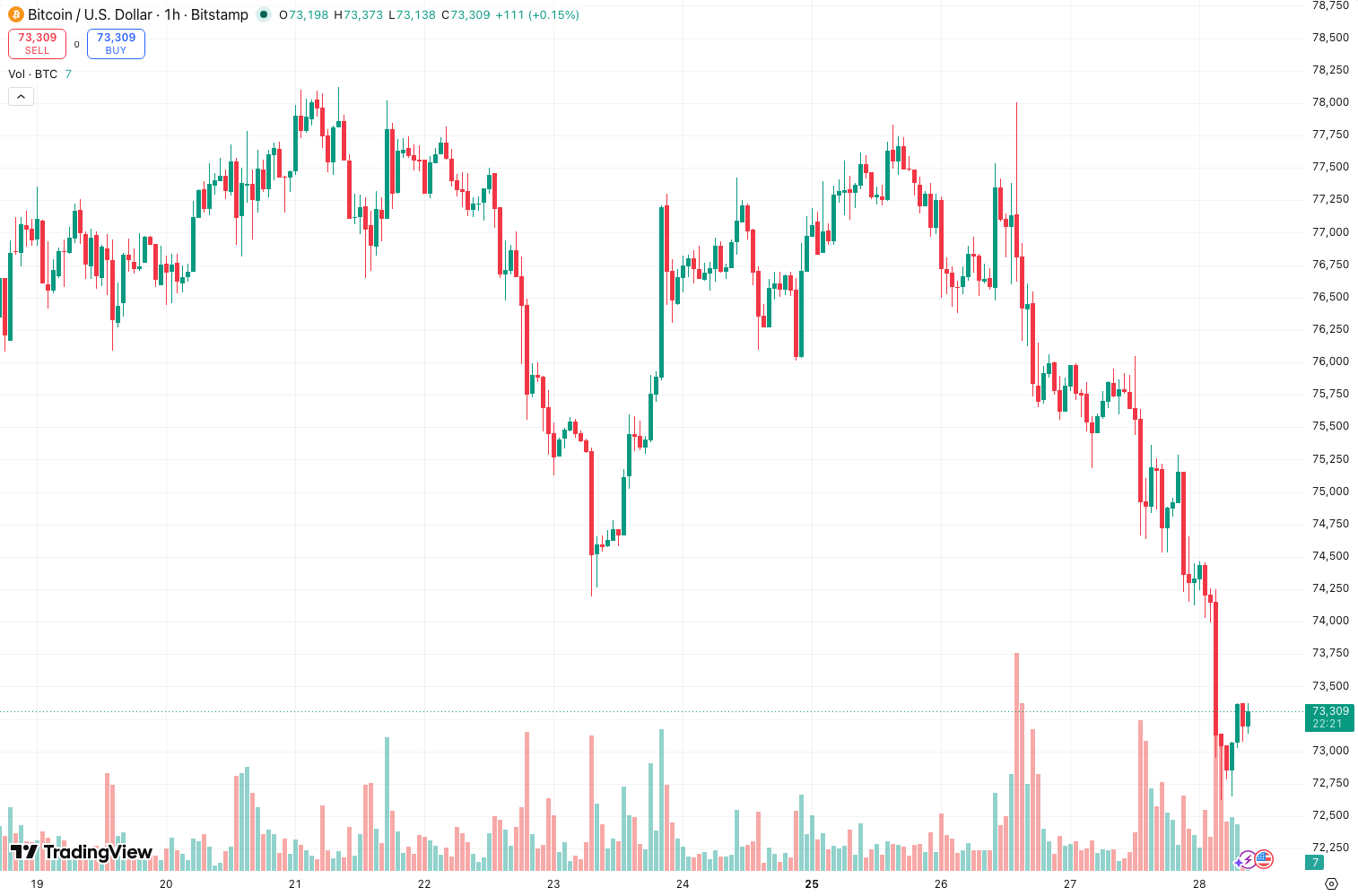
The chart above shows it on a 1H BTC/USDT pair. Notice how the histogram turns a deeper green when momentum accelerates, and fades to light green when it stalls. That’s your clue: don’t chase the arrow alone—wait for the histogram to intensify.
Key Features That Set It Apart
- Strength-graded histogram: Lighter colors = weak momentum, darker = strong. Most indicators ignore nuance.
- Adjustable smoothing period: Default 14, but I prefer 8 for scalping and 21 for swings.
- Trigger sensitivity control: You can tweak how many bars the trigger line lags. Makes it less whippy.
- Alerts built-in: Buy/sell cross alerts work without extra coding.
Best Settings (Tested)
| Timeframe | Smoothing | Trigger Lag | Notes |
|---|---|---|---|
| 1m–5m | 8 | 2 | Fast, noisy but catches early moves |
| 15m–1h | 14 | 3 | Default — solid balance |
| 4h–daily | 21 | 5 | Fewer signals, higher accuracy |
For scalping, use the 8/2 combo but only take buys when histogram is dark green and price is above 20 EMA. For swings, the 21/5 combo works best with a 50/200 MA filter.
How to Use It for Entries and Exits
Long entry:
- Wait for green “Buy” arrow.
- Confirm histogram is medium-dark green (not pale).
- Enter on the next candle close.
- Exit when histogram turns pale green or flips to red.
Short entry:
Same logic reversed. The red arrow alone isn’t enough—wait for dark red histogram.
False signal filter:
If you get a buy arrow but histogram is barely colored, skip. I’d say 60% of those fade out within 3 bars. The chart shows a clear example around the middle—pale green arrow, then price chops sideways.
Honest Pros and Cons
Pros:
- Clean visual: arrows + histogram = easy to scan
- Adjustable lag reduces noise on higher timeframes
- Free alerts are actually useful
- Works on forex, crypto, indices—no special tuning needed
Cons:
- Still whipsaws in ranging markets (like any momentum indicator)
- No built-in stop loss or take profit levels
- Histogram colors can be confusing at first (light vs dark)
- Doesn’t work well alone on M1—needs a volume filter
Who It’s Actually For
- Swing traders on 4H+ who want momentum confirmation
- Scalpers who pair it with a trend filter (EMA, VWAP)
- Beginners who want clear “go/no-go” signals without overcomplication
Not for: pure price action traders who hate indicators, or anyone trading without a stop.
Better Alternatives
- SuperTrend – better for trending markets, gives explicit SL levels
- MACD with histogram – more customizable, but no arrows
- QQE – similar concept, but with a volatility band that reduces whipsaws
If you already use MACD, you don’t need this. But if you want a cleaner, more visual version of momentum + trigger, Directional Flow Signals is a solid upgrade.
FAQ
Q: Does it repaint?
A: No. The arrows and histogram stay fixed after bar close. Live arrows can flip intra-bar, but that’s standard.
Q: Can I use it for crypto?
A: Yes. I tested on BTC and ETH. Works fine, but add a volume filter for low-cap alts.
Q: Best timeframe?
A: 1H to 4H. Lower than 15m becomes noise heavy.
Q: Does it work with futures?
A: Yes. No repaint, so you can automate signals if you’re into that.
Final Verdict
Directional Flow Signals isn’t revolutionary, but it’s well-built and does exactly what it promises: filter momentum with a strength gauge. It won’t make you a millionaire, but it’ll save you from taking weak signals. For the price (free), it’s a solid addition to any momentum trader’s toolkit.
Rating: ⭐⭐⭐⭐ (4/5)
One star off for the lack of built-in risk management and the slight learning curve on histogram shades. Still, I keep it on my charts for swing entries.
Go Deeper with The Indicator Lab
🔬 The Lab Report — 93 indicators. 20 markets. One consensus verdict every 15 minutes. Stop guessing which indicator to trust.
📈 The Lab Edge — Time-Series Momentum across 166 markets. The same framework institutions use. Weekly signals to your phone.
📊 Prefer to trade on your own? Power your analysis on TradingView — the platform behind every review on this site.
Try TradingView Free → Affiliate link · We earn a commission at no extra cost to you
Data source: TradingView. This review is based on publicly available indicator information and hands-on testing. Always test indicators in a demo environment before live trading.
Are you about to add another indicator to an already cluttered chart?
Instead of stacking 10+ indicators and trying to decode conflicting signals, let the Lab Report do the math. 93 indicators. 20 markets. One consensus verdict. Every 15 minutes.
Consensus tells you what. Momentum tells you when.
The Lab Edge runs Time-Series Momentum — the same framework institutions use — across 166 markets, 95% profitable in backtesting. One signal. Once a week. No indicators to configure.
🔬 Are you the developer of this indicator? Email us →